
Project Overview (NDA-Friendly)
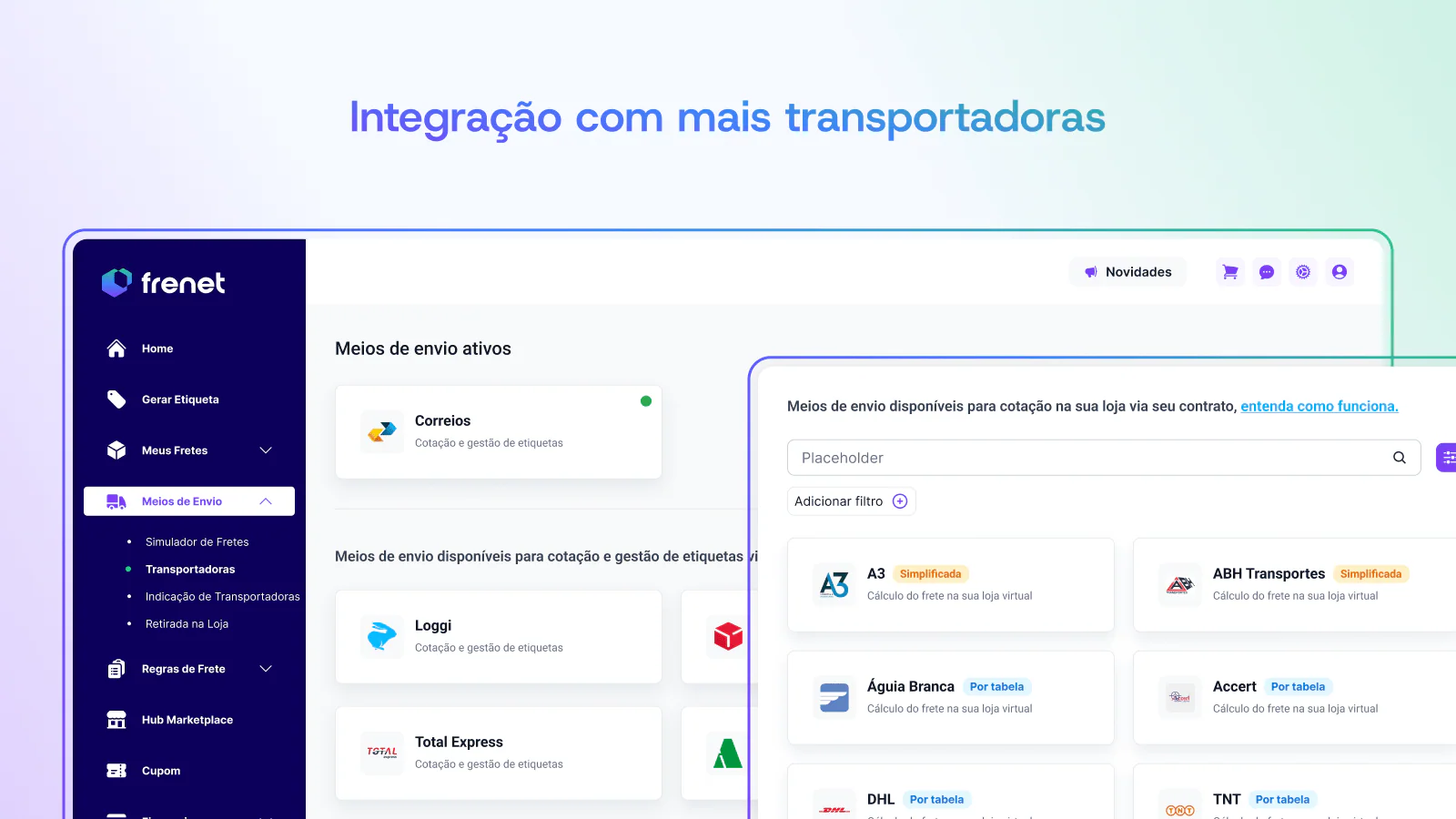
Frenet is a Brazilian SaaS platform for freight management, part of the Skydropx group, a logistics technology company operating in Brazil, Mexico, and Colombia. As the product team grew and the feature roadmap expanded, the pressure to deliver faster without compromising quality became a central challenge for the design practice.
With the support of Frenet's leadership, I developed and implemented a personal AI-augmented design workflow: a structured, end-to-end process that integrates generative AI tools at every stage of the design cycle, from discovery to developer handoff. This initiative is part of a broader organizational commitment to building an AI-driven DesignOps culture across the Latin American team.
My Role
Product Designer responsible for designing, testing, and documenting the AI-integrated workflow, in close collaboration with the development team and product leadership. This project was officially authorized by Frenet as part of an initiative to leverage AI to improve design operations across the organization.
The Challenge
The design process at Frenet involved multiple time-consuming stages — discovery, benchmarking, ideation, prototyping, and handoff, each requiring significant manual effort. Without AI support, the cycle from a new PRD to a validated prototype ready for development could stretch across several days, limiting the team's ability to respond quickly to business needs and stakeholder feedback.
The question driving this initiative was: how can a product designer use generative AI as a genuine workflow accelerator, not just as a tool for isolated tasks, but as a structured layer that improves every phase of the design process?

The Workflow
I designed a four-phase pipeline that integrates different AI tools at each stage, connecting discovery to delivery in a continuous, documented flow.

Phase 01 - Discovery & Research
Organizing knowledge with NotebookLM
Every new task starts with a discovery phase. When I receive a new PRD, I upload all relevant research materials, user interview transcripts, competitive analysis documents, and market references into NotebookLM. This creates a queryable knowledge base that I use to identify patterns, surface insights, and answer specific research questions without having to manually cross-reference multiple documents.
I use the same approach for benchmarking: instead of reviewing competitor products in isolation, I consolidate all findings into NotebookLM and query them to generate structured comparisons and identify opportunities. This transforms hours of manual synthesis into a focused, conversational research process.
Phase 02 -
Ideation & Rapid Prototyping
Context engineering with Claude + Figma MCP
Once I have a clear research foundation, I move into ideation. I've trained Claude using structured Markdown files called "Skills" built from Frenet's design system documentation, UX writing guidelines, and handoff standards. These files give Claude the contextual knowledge it needs to generate design proposals that are already aligned with the product's visual language and component library.
Claude is connected to Figma via MCP (Model Context Protocol), which means I can generate and iterate on interface proposals directly inside the design environment. Using prompt engineering techniques, I guide Claude to produce initial screen compositions, explore layout variations, and apply design tokens consistently, dramatically accelerating the ideation phase without starting from scratch.

Phase 03 -Refinement & Validation
From AI-generated proposals to high-fidelity prototypes
The AI-generated proposals serve as a starting point, not a final output. I review and audit each proposal against design system standards and UX principles, refine the details manually, and build high-fidelity prototypes for stakeholder review. The refined prototypes go through an internal validation cycle with my design lead, and the approved direction is then presented to the company's board for final sign-off.
This human-in-the-loop approach ensures that AI accelerates the creative process without replacing the designer's judgment, the quality bar remains high, and every decision is intentional.
Phase 04 - Documentation
& Handoff
AI-assisted developer handoff
Once a design is approved, I use Claude to generate the handoff documentation, component annotations, interaction notes, spacing specifications, and flow descriptions. I then organize all user flows in Figma, run a final audit against the design system, and deliver a complete, structured handoff package to the development team. This ensures that developers receive clear, consistent documentation from the first delivery, reducing back-and-forth and implementation errors.

Business Impact
The AI-augmented workflow produced measurable improvements across the design cycle, with direct impact on delivery speed, prototype quality, and cross-functional collaboration.
Faster time-to-prototype
Projects that previously required two full days of ideation and prototyping are now completed in a fraction of the time, using the Claude + Figma MCP pipeline.
Higher-fidelity
first drafts
Because Claude is trained on Frenet's design system, AI-generated proposals are already aligned with the product's visual language — requiring less rework from the start.
Smoother stakeholders presentations
Interactive prototypes generated outside Figma eliminated common presentation issues like lag, broken flows, and navigation failures, making demos more fluid and effective.
Structured, consistent handfoffs
AI-assisted documentation ensures developers receive complete, well-organized specs from the first delivery, reducing ambiguity and implementation errors.

Key Learnings
Context engineering is the real skill: the quality of AI output is directly proportional to the quality of the context you provide. Building the Skills files was as much a design exercise as a technical one.
Context engineering is the real skill: the quality of AI output is directly proportional to the quality of the context you provide. Building the Skills files was as much a design exercise as a technical one.
AI works best as a collaborator, not a replacement: the most effective use of these tools came from combining AI-generated speed with human judgment and design expertise at the refinement stage.
A structured workflow beats isolated tool use: integrating AI across the full pipeline (discovery → ideation → validation → handoff) produced far more consistent results than using it for individual tasks.
Organizational support is a prerequisite for scale: having Frenet's endorsement meant this workflow could be documented, shared, and potentially expanded to the full Latin American design team.